Meet the neighbours · herb
Chamomile
A common name for several daisy-like plants in the Asteraceae family — three chamomiles make a gentle, calming infusion.
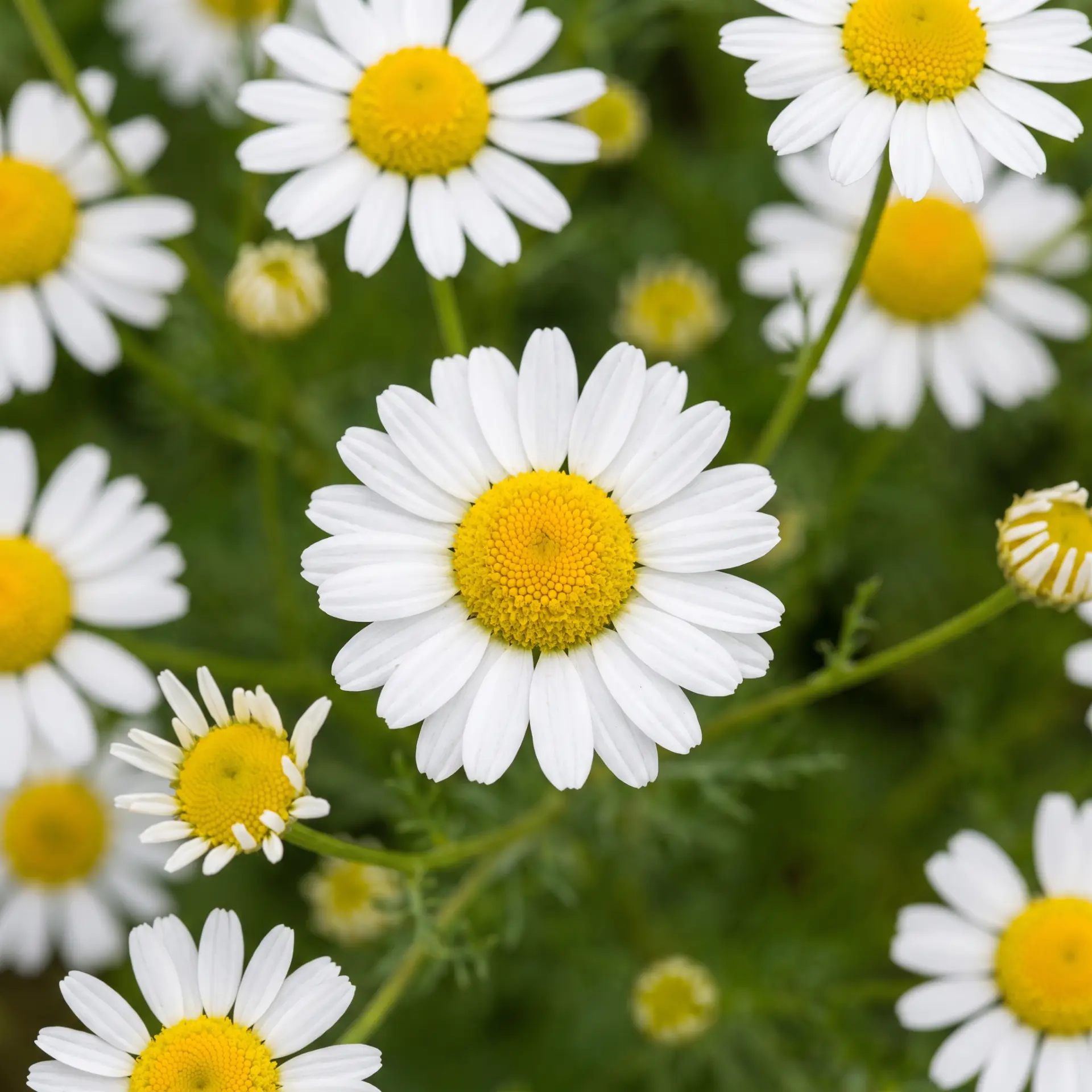
Chamomile is a common name for several daisy-like plants in the Asteraceae family. In Alberta, three types are worth knowing: Roman Chamomile, German Chamomile, and Wild Chamomile (also called Pineapple Weed). All are technically 'weeds' in some sense, but Cindy doesn't consider that a bad word.
How to grow it
- Roman Chamomile: A low-growing perennial (3-6 inches tall) that can take over a garden if not planted carefully — choose a permanent spot for it, since it spreads.
- German Chamomile: An annual reaching about 2 feet tall — the most familiar type. Though annual, it's an aggressive self-seeder and tends to return year after year.
- German Chamomile grows well even in poor soil. Sow seeds directly in the garden around the same time you'd plant peas — the seeds are tiny, almost dust-like, so scatter them on the soil surface and gently tamp down.
- German Chamomile germinates in 7-10 days; needs to be kept weeded while young.
- Look-alike warning: German chamomile is often confused with feverfew since their flowers look similar — the plants themselves differ, with feverfew being more compact.
- Wild Chamomile (Pineapple Weed) is native to North America, grows 2-16 inches tall in poor, compacted soil, and is commonly found along roadsides and in sidewalk cracks.
- Despite the name, Wild Chamomile is technically a wildflower, not a true weed. It flowers from early spring through September.
- Crush the Wild Chamomile flower head between your fingers for a sweet, pineapple-like smell — a good way to positively identify it. Avoid foraging it near roadsides due to pollution exposure.
How to use & eat it
- Cindy is careful to distinguish 'herbal tea' from true tea — since true tea comes from the tea plant, herbal preparations are technically infusions, not tea.
- How to make it: Start with a small handful of fresh flowers or a tablespoon of dried flowers, pour boiling water over top, and steep a few minutes before straining. The first pour will be milder; a second pour from the same flowers will be stronger.
- Save leftover tea in the fridge — makes a great chilled tea the next day.
- Traditionally used as a mild sleep aid, to calm an upset stomach, and soothe heartburn.
- Start with a weak dose until you know how it affects you. Those with pollen allergies, or infants/anyone with a compromised immune system, should avoid it or use caution.
Other neighbours
- SorrelOften called 'Lemon Sorrel' for its bright, gently lemony flavour — prized in both European and Asian cooking.