Foodborne botulism is not a thing of the past. If we assume it is, it's only because fewer people are home-canning. It is nearly always caused by improper processing of canned foods, often because 'that's the way Mom did it.'
Keeping the harvest
Canning &preserving
What to do when the counter is full and the season is ending. Five methods that work in a normal kitchen, with no special room and no farm-sized equipment.
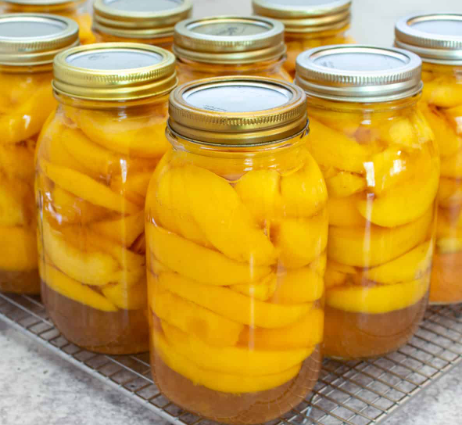
CanningHot Water Bath
Great for: Apples, apricots, berries, cherries, cranberries, grapes, citrus, peaches, pears, plums, rhubarb, and tomatoes (with added acid).
High-acid foods only — vegetables and proteins require a pressure canner instead.
How to do it
- 1Use the freshest produce possible — quality starts declining within an hour of harvest.
- 2Gather all jars, lids, rings, and ingredients before you start.
- 3Wash jars in hot soapy water; sterilizing isn't needed if you'll process 10+ minutes.
- 4Fill jars, leaving proper headspace (usually 1/4"–1") so contents don't boil over.
- 5Add extra acid for safety — 1 tbsp lemon juice per pint (2 tbsp per quart) for most fruit; 2–4 tbsp vinegar per quart for tomatoes.
- 6Wipe the jar rim clean, add the lid, and screw the ring on finger-tight only.
- 7Lower jars into boiling water at a slight diagonal, covered by 1–2 inches of water.
- 8Start timing once the water returns to a full boil.
- 9Remove jars and let them cool undisturbed for 12–24 hours — don't press or tap the lid.
- 10Check the seal: the lid should be concave and give no when pressed, with an audible "ping" as it cooled. If it doesn't seal, refrigerate and use within days.
Botulism safety
Botulism thrives in low-acid, low-oxygen conditions — exactly what improperly canned food creates. High-acid foods are safe in a hot water bath; low-acid foods (all vegetables, proteins) MUST be pressure canned at 240°F+. Never guess at timing or pressure — always use a trusted guide.
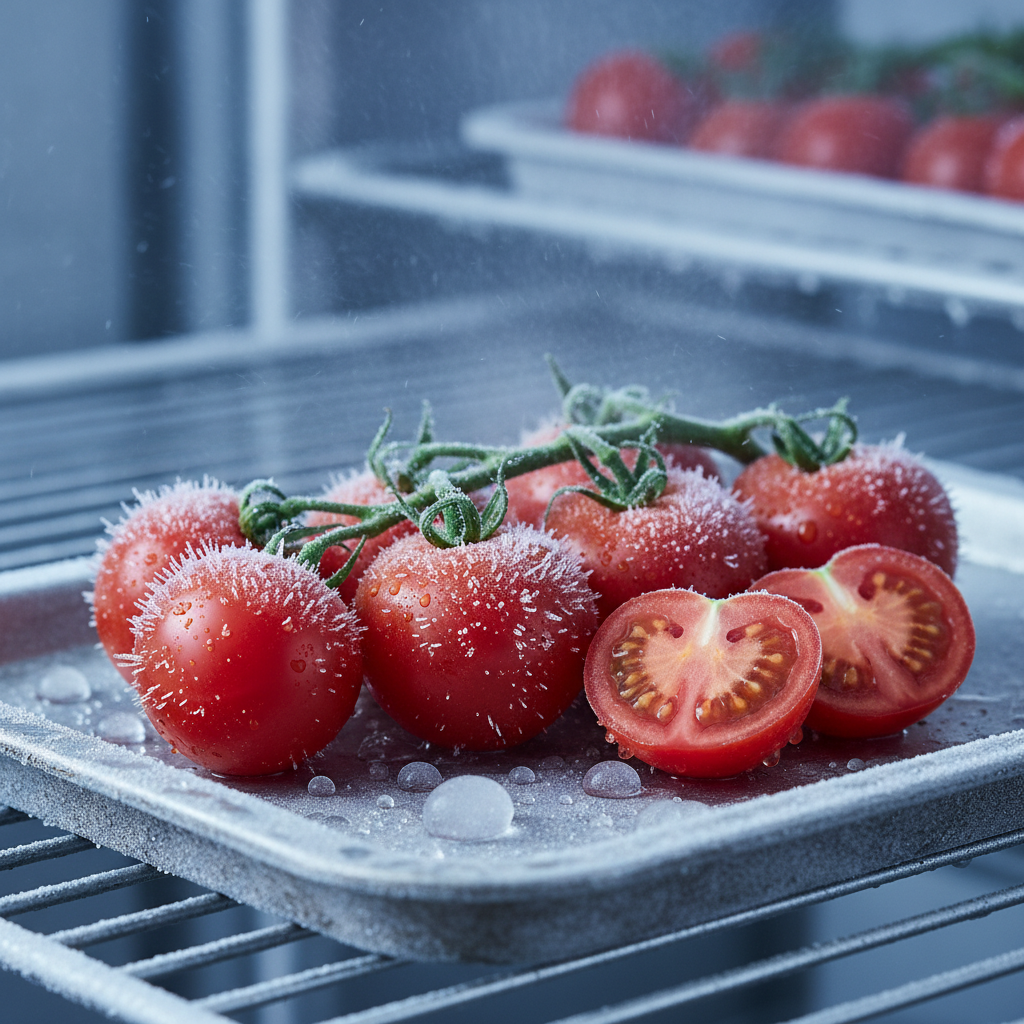
Freezing
Great for: Tomatoes, corn, cabbage (for cabbage rolls), and herbs where texture matters less than convenience.
Shelf life: 4 months to a year properly prepared; nutritional value is about 60% of fresh. Get food into the freezer as close to harvest as possible.
How to do it
- 1Choose good-quality produce, free of disease or damage.
- 2Prep as needed (whole, sliced, or blanched) — Cindy freezes tomatoes whole with no prep at all, straight into a bag.
- 3Lay items flat in the freezer until solid.
- 4Label with the date.
- 5Rotate stock first-in, first-out, and use within a year.
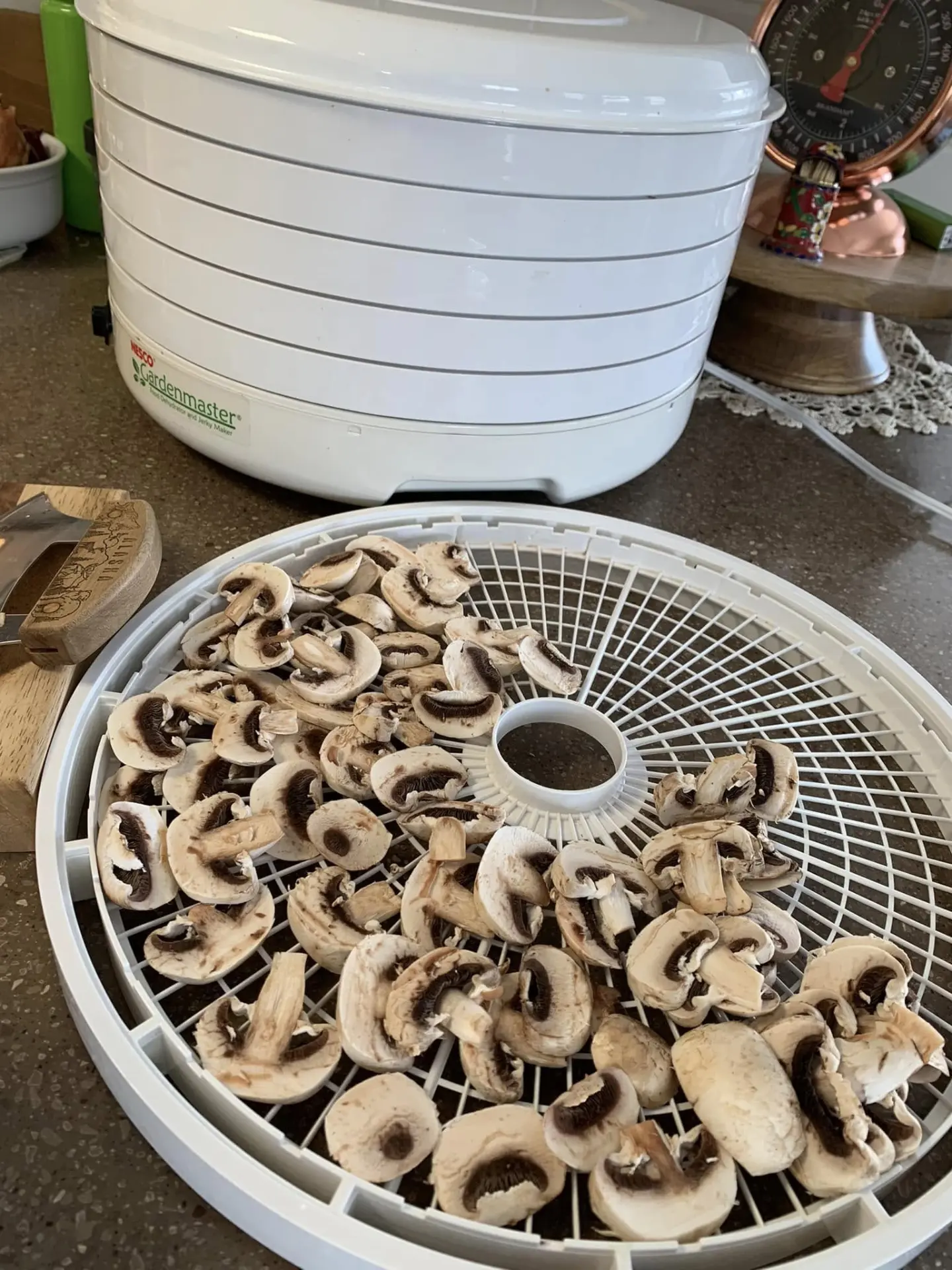
Dehydrating
Great for: Herbs, apples, cherries, plums, carrots, kale, onions, garlic, meaty tomatoes, mushrooms, zucchini, and beets.
Shelf life: Fruit ~1 year, vegetables ~6 months, meat 1–2 months (6 months vacuum sealed), with up to 80% nutrition retained if processed promptly. Store in a cool room (40–70°F), out of direct light. Never dehydrate high-fat foods, dairy, or proteins.
Cindy's dehydrator journey
- 1Started in her kitchen oven in the late 1970s.
- 2Later borrowed friends' homemade fridge-converted dehydrator.
- 3Had her husband Dan build a large plywood dehydrator that held 40+ lbs of apples at a time.
- 4Eventually downsized to a countertop Nesco Garden Master, used for years.
- 5Passed it to her son to refurbish — now they share trays between two machines.
By food
- Herbs
- Basil, oregano, rosemary, sage, savory, tarragon, thyme: wash, drain, arrange in a single layer. Dry until crispy — a couple hours for oregano/thyme, double that for basil. (Dill weed, chives, and cilantro don't dry well — freeze those instead.)
- Garlic
- Slice, dry outdoors if possible (strong smell), then store sliced or ground into powder.
- Apples
- Peel, core, slice 1/8–1/4" thick, soak in lemon water to prevent browning, dry 6–12 hours.
- Sour cherries
- Pit, halve, dry cut-side up — use like raisins once dried.
- Plums
- Quarter (no need to pit-soak) — they become "prunes," and can never be a plum again, even rehydrated.
- Carrots
- Chop small for soup use; leftover carrot juice pulp can also be dehydrated for muffins.
- Corn, peas, beans, peppers
- Blanch first (as if freezing), then dehydrate for soups.
- Kale
- No blanching needed — chop, stack deep on racks, dries quickly.
- Onions
- Rinse in cold water first to cut the smell, dry outdoors if possible.
- Spinach / delicate greens
- Steam and shock in cold water first (though Cindy prefers freezing these instead).
- Tomatoes
- Choose meaty types like Roma; slice thin, flip halfway through.
- Zucchini
- Pick before it gets huge; slice or grate depending on use.
- Beets
- Not traditionally dehydrated, but can be sliced and powdered like tomato powder for smoothies.
Temperature matters
Keep it low — 115–125°F for delicate fruits like citrus and strawberries. For apples, start at 145°F for the first hour to remove surface moisture, then drop to 135°F for the rest of the drying time to prevent "case hardening."
“Store what you EAT, and eat what you store.”
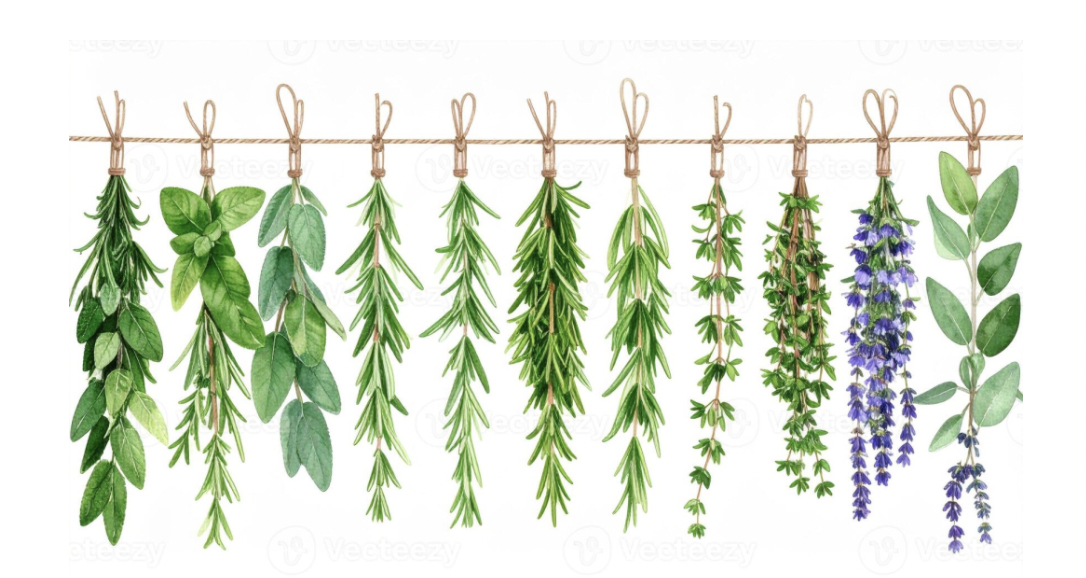
Air Drying
Great for: Herbs, flowers, and flowering herbs that lose petals as they dry.
No dehydrator needed — just clean towels, time, and good airflow. This is Cindy's preferred method for many herbs, since she finds some (like rosemary) go too dark in a dehydrator.
How to do it — Method 1: Flat on a Towel
- 1Wash the herb and shake off excess water.
- 2For bigger leaves (like sage), pinch off individual leaves; for herbs with smaller leaves (like rosemary or savory), leave whole sprigs intact.
- 3Lay loosely on a clean kitchen towel, spread out so air can reach everything.
- 4Leave out in the open air for about a week (longer if the weather is humid).
- 5Fluff with your fingers once or twice a day to make sure everything dries evenly.
- 6You'll know it's ready when it's completely dry and brittle — for stemmed herbs, strip the leaves off using your fingers or the tines of a fork.
- 7Store in an airtight glass jar, labeled, out of direct light.
How to do it — Method 2: Hang with a Paper Bag
- 1Cut stems just above the first set of leaves, rinse to remove dust.
- 2Bundle the stems together and hang upside down.
- 3Tie a paper bag loosely around the hanging flowers — this catches petals as they drop instead of losing them.
- 4Leave until completely dry.
- 5Store the dried leaves and petals together in a sealed glass jar, out of the light.
Fermenting
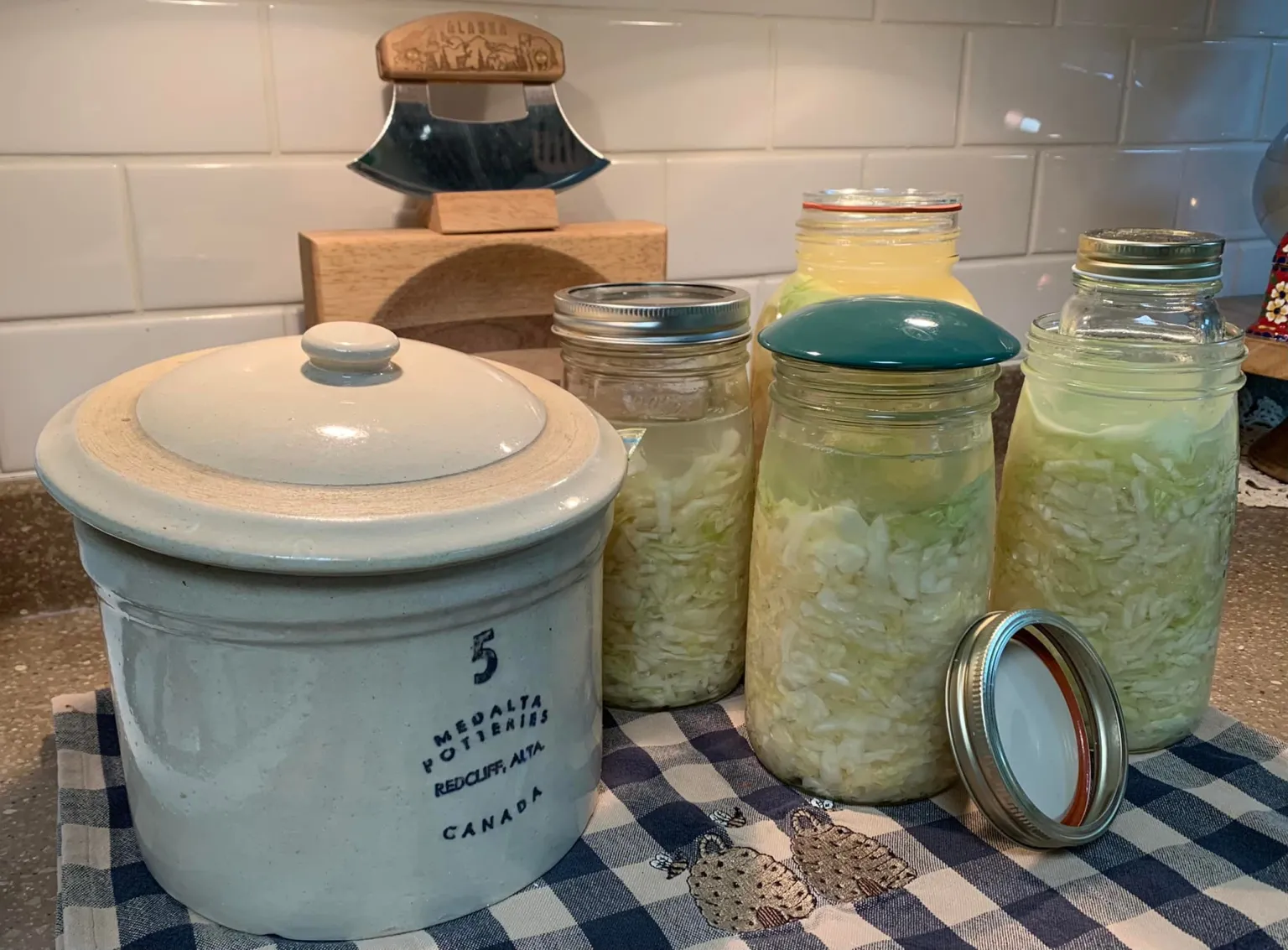
Great for: Cabbage (sauerkraut being the classic) — fermentation uses naturally occurring good bacteria to convert sugars into lactic acid, producing gut-healthy probiotics.
How to do it
- 1Finely shred the cabbage.
- 2Layer it with pickling salt in a clean container.
- 3Press down firmly and repeatedly to draw liquid from the cabbage — this becomes the fermenting brine.
- 4Keep the cabbage fully submerged under its own brine as it ferments.
- 5Let it ferment at room temperature to your desired sourness, then move to cold storage.
Vinegar / Pickling
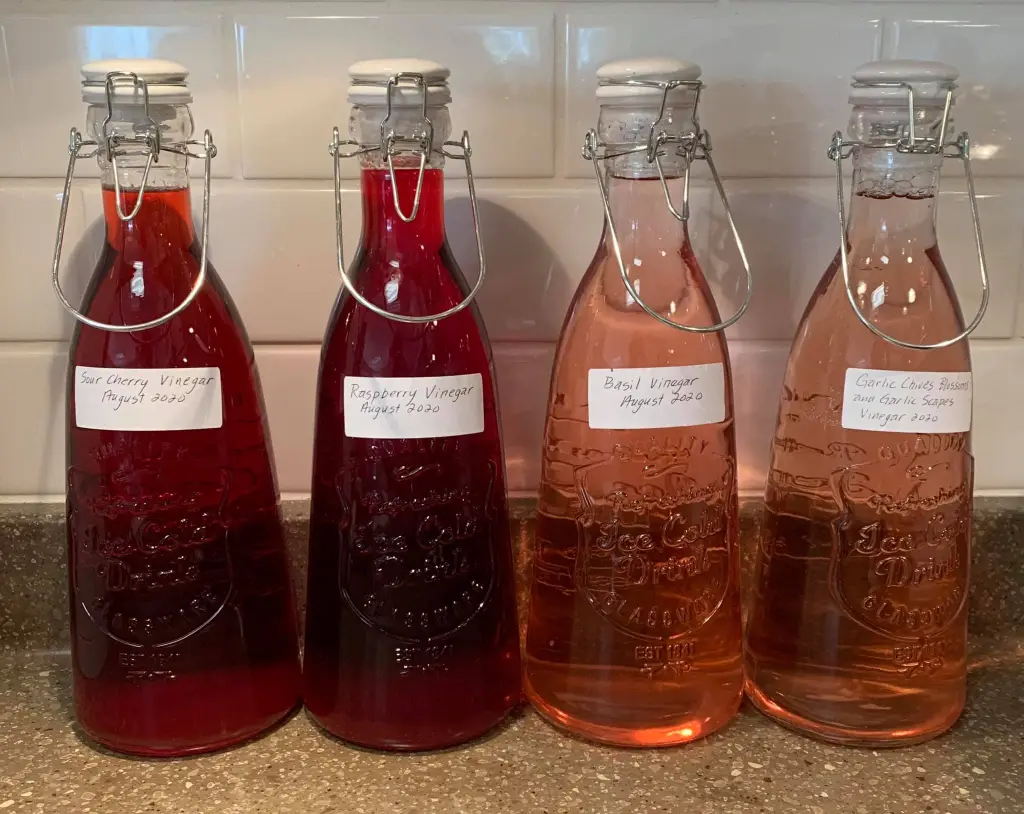
Great for: Cucumbers, beets, carrots, nasturtium seeds (as a caper substitute), and flavoured vinegars made from garden herbs and flowers.
How to do it — Basic pickling
- 1Rinse produce and pack into a clean jar.
- 2Make a pickling solution (vinegar, water, salt) and bring to a boil.
- 3Cool slightly, then pour over the packed jar.
- 4Seal and let sit at least 3 weeks — longer for more flavour.
How to do it — Flavoured vinegar (e.g. Chive Blossom Vinegar)
- 1Pick blossoms or herbs at their peak, rinse gently.
- 2Fill a jar loosely (don't pack tightly) with the plant material.
- 3Top with white vinegar, fully covering everything.
- 4Seal and place somewhere sunny for about 2 weeks, watching the color slowly transfer.
- 5Strain through cheesecloth, discard the plant material, and store in the pantry out of direct light. Use within a year.
Storage Guide
What keeps, and how — Cindy's notes crop by crop.
Apples
- Cold Storage
- Yes — colder the better.
- Refrigeration
- Yes, 1–2 months.
- Freezing
- Yes (pie filling, sauce, juice).
- Canning
- Yes.
- Dehydrating
- Yes, thin wedges/rings.
- Pickling/Fermenting
- No.
- Freeze Drying
- Yes.
Asparagus
Best eaten fresh.
- Cold Storage
- No.
- Refrigeration
- Short-term.
- Freezing
- Yes.
- Canning
- Not suitable.
- Pickling/Fermenting
- Yes.
- Dehydrating
- No (bad texture).
- Freeze Drying
- Yes.
Beans
- Cold Storage
- No.
- Refrigeration
- Short-term.
- Freezing
- Yes, blanch 2–3 min first.
- Canning
- Yes, under pressure.
- Pickling/Fermenting
- Yes.
- Dehydrating
- Not great — texture suffers.
Beets
- Cold Storage
- Short-term.
- Refrigeration
- Yes (best option).
- Freezing
- Yes, cook first (roast or boil), then peel and package.
- Canning
- Yes, pressure canner required (low-acid food).
- Dehydrating
- No.
- Pickling/Fermenting
- Yes.
- Freeze Drying
- Yes.
Berries
- Cold Storage
- No.
- Refrigeration
- Yes.
- Freezing
- Yes.
- Canning
- No (too delicate).
- Dehydrating
- Mixed — not great for currants/haskaps/saskatoons, good for strawberries if not sliced thin.
- Jams
- Yes.
- Vinegars
- Yes.
Cabbage
- Cold Storage
- No.
- Refrigeration
- Short-term.
- Freezing
- Yes (for cabbage rolls).
- Fermenting
- Yes — sauerkraut is a family favorite.
- Freeze Drying
- Maybe.
Carrots
- Cold Storage
- Yes, packed in clean sand.
- Refrigeration
- Yes, a few months in breathable bags with a paper towel liner.
- Freezing
- No — gets rubbery.
- Canning
- Yes, pressure canner.
- Dehydrating
- Yes, chop small, best refreshed in soups.
- Pickling/Fermenting
- Yes.
- Freeze Drying
- No.
Cherries / Sour Cherries
- Refrigeration
- Short-term.
- Freezing
- Yes, pit first.
- Canning
- Yes, add lemon juice.
- Dehydrating
- Yes, pit and halve.
- Freeze Drying
- Yes.
- Jams
- Yes.
- Juicing
- Yes.
- Vinegars
- Yes.
Corn
Best eaten same-day.
- Freezing
- Preferred method — grill, cut kernels, freeze in portions.
- Canning
- Yes, under pressure.
- Dehydrating
- Not recommended.
Cucumbers
- Refrigeration
- Short-term.
- Freezing
- No.
- Canning
- Only as pickles.
- Freeze Drying
- Yes, in dices (not slices) for best texture.
- Pickling/Fermenting
- Yes, definite yes.
Garlic
Cure by hanging in bundles until dry/brown/crispy, then store in small paper bags in a dry, dark, cool spot.
- Dehydrating
- Yes, slice and dry, then powder.
- Garlic salt
- Process fresh garlic with kosher salt, bake at 200°F until dry.
Grapes
- Refrigeration
- Short-term.
- Freezing
- Yes, great for smoothies all winter.
- Canning
- No.
- Dehydrating
- No (seeds too hard).
- Juicing
- Yes.
- Jam
- Yes — "the best jam in the history of the world."
Herbs (general)
Most herbs dehydrate well. Dill and chives are exceptions — too delicate to dry, chop and freeze instead.
- Dehydrating
- Thin-leaf herbs (basil, mint, oregano, parsley, tarragon, thyme) can air-dry on a towel; thicker batches go in the dehydrator.
Kale
- Freezing
- Yes, blanch 1 minute, shock in ice water, pat dry, freeze (6–9 months if blanched).
- Dehydrating
- Cindy's preferred method, 2–3 hours in dehydrator.
- Freeze Drying
- One of her favorites.
Onions
For long-term storage: cool, dry, dark, ventilated, and cured first (dry until necks are tight and papery).
- Cold Storage
- Yes, cool/dry/dark/ventilated, must be cured first.
- Refrigeration
- No (too damp, causes rot) — unless using within a couple weeks.
- Freezing
- Yes, loses crunch, best for cooked dishes.
- Dehydrating
- Yes, but the smell lingers — do it outside if possible.
- Pickling/Fermenting
- Yes.
- Freeze Drying
- Yes.
Peas
- Freezing
- Yes, blanch 1.5–2 min, flash freeze, then bag (6–12 months).
- Canning
- Yes, under pressure.
- Freeze Drying
- Yes — great as a snack.
Peppers
- Refrigeration
- Short-term.
- Freezing
- Yes, raw and chopped, no blanching needed (9–12 months).
- Canning
- Yes, under pressure.
- Dehydrating
- Yes.
- Freeze Drying
- Yes.
Potatoes
Never refrigerate (converts starch to sugar, ruins texture). Store cool (not cold), dark, in a breathable container.
- Canning
- Yes, under pressure.
- Freeze Drying
- Yes.
Pumpkins / Winter Squash
Store cool (not cold), dry, dark; wipe with diluted bleach water first to prevent rot.
- Freezing
- Yes, but watery texture.
- Canning
- Yes, in chunks, under pressure.
- Dehydrating
- No.
- Freeze Drying
- Yes.
Rhubarb
- Freezing
- Yes, wash/chop/bag.
- Canning
- Yes, cold-pack with sugar/juice, 10 min hot water bath.
- Jam
- Foundational to most of her red jams.
- Dehydrating
- Only as fruit leather.
Sorrel & other greens (Spinach, Swiss Chard, Amaranth)
- Freezing
- Yes, blanch lightly and bag.
- Freeze Drying
- Yes.
Tomatoes
Never refrigerate while ripening (ruins texture/flavour).
- Freezing
- Yes, short-term, for cooking only.
- Canning
- Yes, always add vinegar or lemon juice for acidity.
- Dehydrating
- Yes.
- Freeze Drying
- Yes, but delicate.
Zucchini
- Cold Storage
- Short-term for large ripe ones.
- Freezing
- Watery unless shredded for baking.
- Dehydrating
- Her preferred long-term method.
- Freeze Drying
- Yes, but can get spongy.
- Pickling/Fermenting
- No.