Beginning of May
Wild spinach ( lambs quarters) for fresh greens every day. Spinach, if planted. Beets, radishes, swiss chard, and carrots get direct-sown now — potatoes go in end of April or early May. By mid-May, rhubarb is ready.
What's ready in the yard
I garden in Edmonton, Alberta (Zone 3b/4a) — if you're in a warmer or colder climate, your dates may shift a few weeks earlier or later.
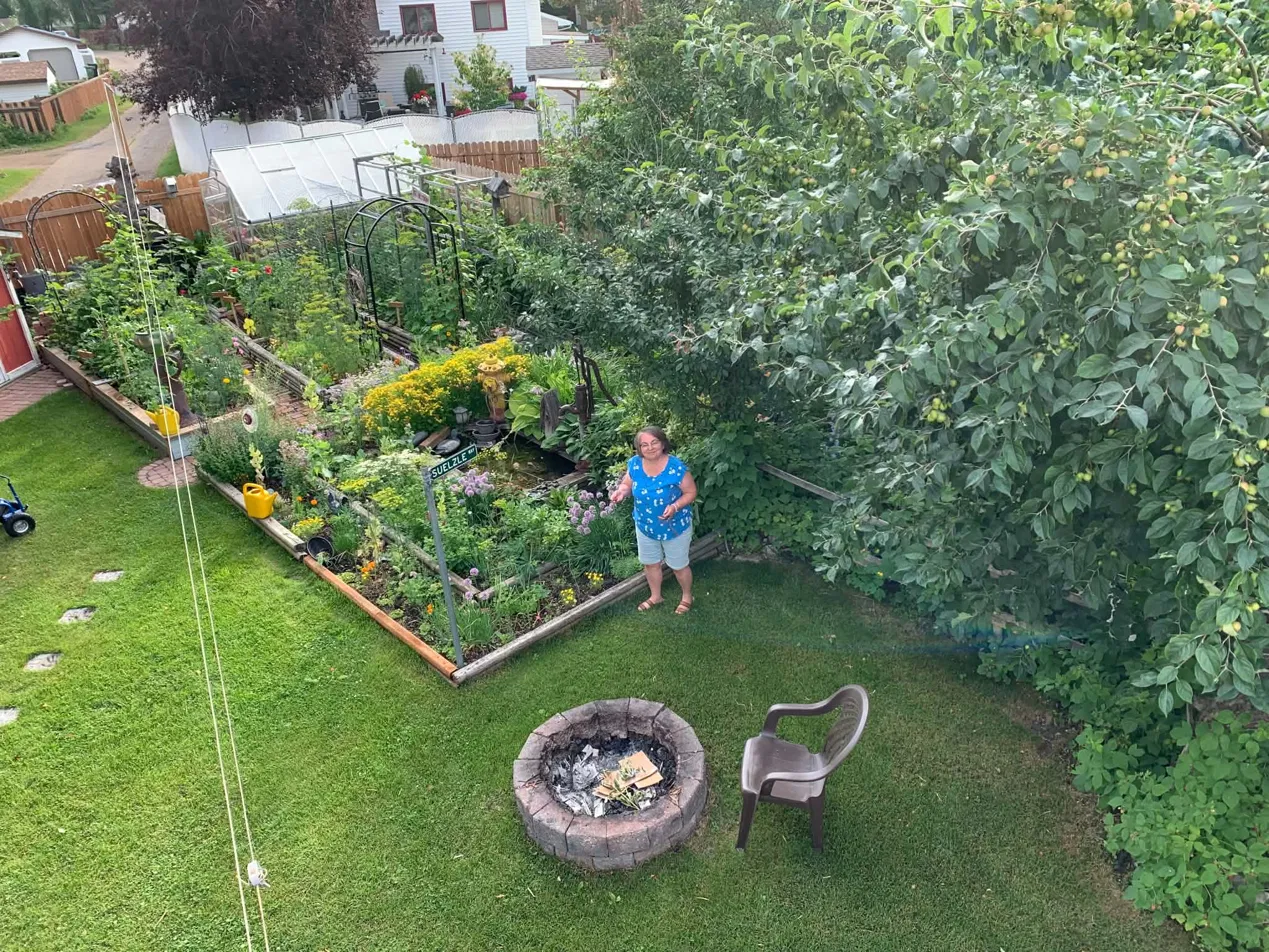
"Sometimes new gardeners have the idea that gardening is like a sandwich. They expect to plant in the spring and harvest in the fall. If you've gardened for a while, you know the truth is very different. Aside from the near daily attention of watering and weeding, you can begin eating out of your garden within the first few weeks after planting, and throughout the growing season. Harvest is an ongoing process all season long. That means you're picking and eating, but also picking and freezing, picking and canning, picking and pickling or fermenting, and picking and dehydrating all that isn't consumed right away."
Wild spinach ( lambs quarters) for fresh greens every day. Spinach, if planted. Beets, radishes, swiss chard, and carrots get direct-sown now — potatoes go in end of April or early May. By mid-May, rhubarb is ready.
Chickweed is ready — great in green smoothies with kefir and freeze-dried pineapple. More rhubarb for smoothies, jams, sauce, baking, drinking, and concentrates for carbonated drinks — all summer and into winter.
Haskaps are ready — eat fresh, add to muffins and pancakes, make into jam or syrup, add to smoothies or lemonade, and freeze for smoothies all winter long. The early strawberries come on now too. More rhubarb.
Lettuce, cilantro, tatsoi, strawberries, and sorrel are ready. Still eating lambs quarters daily, parsley starting. Use the greens in stir-fries, scrambled eggs, omelettes, pasta, soups, and salads. Nasturtiums are ready. More rhubarb. Basil, chives, garlic chives, and winter onions are ready.
Start picking oregano, thyme, rosemary, tarragon, and other herbs — use fresh, or dry for later. Use mint for flavouring ice water, tea, and watermelon salad.
Peas are ready. Garlic scapes are ready — great for making garlic scape butter to freeze and use all year. Beans are ready, small tomatoes are coming on, garden dill is ready. Start thinning (and using) carrots, beets, chard, and rutabaga greens. Raspberries are ready to pick. Black currants are ready. Cherries are ready. Swiss chard is ready — that means spanakopita!
Picking happens daily. The dehydrator runs daily, the canner's on the stove, jars are in the dish rack. When produce is ready, it takes priority — everyone who wants to eat in winter pitches in. Chickweed goes in the freezer for green smoothies, and chickweed seed is saved for indoor growing through winter.
The main potato crop is still a good 120 days out, but I start "stealing" young potatoes now — reach in gently at the edge of the hill, take a few, and leave the plant to keep growing.
Around the beginning of August the garlic stalks start dying back — the first sign the bulbs are sizing up. The real harvest doesn't come until September or early October, sogarlic chives stand in all summer long till the real stuff is ready.
August is the month you bring everything inside. One day it was lavender, basil, and blackcurrants. The next it was green beans, raspberries, thyme, and oregano. There's seemingly no end to it.
45 years ago, an old farm gramma named Elsie Manchak told me: “When something is ready, it's READY now! Everything else can stop and wait, because the raspberries won't. And neither will anything else in the garden. Pick it. And then take care of it!”
We used to buy our fresh milk from Elsie — I'd walk out with a clean gallon jar twice a week and trade her for a new one. She's long since gone, but her words have stayed with me all these years.
What I took from her: what's available in the garden is a gift, and showing gratitude for it means making the most of it. If I waste it, I don't deserve it. After working so hard to grow it, it only makes sense to work just as hard to preserve it for the cold days ahead. Harvesting and preserving was as much a part of the learning curve as growing ever was.
Some days the beans are ready, but I don't get to them till evening. Guess I'm not going to bed for a while.
Thank you, Elsie. You taught me well.
By September there are always a bunch of dead and dying plants, some still coming into their own, and lots of weeds going to seed. It's tempting to lose interest as the days get darker and colder, but putting the garden to bed properly is an important step for its health next spring — one more final push, and then you can both rest, guilt-free.
Cut down and bring in herbs for winter use one last time — sage, rosemary, tarragon, stevia, mint, lemon balm, oregano, thyme, parsley, and lemon verbena — plus a final lavender harvest. Then cover bare soil with mulch, fallen leaves or straw: everybody likes a comfy blanket — in gardens we call it mulch.
When frost is coming, pull the whole tomato plant and flip it upside down to find every hidden tomato still on it. Twist them off and box them separately by ripeness stage, storing at room temperature to keep ripening. Smaller branches get mowed into home compost; bigger woody stalks go to city compost, since they take too long to break down at home. If you love a particular heritage tomato, save its seed for next spring.
I've tried planting late spinach and heating the greenhouse into fall, and honestly — it isn't worth it. By September, Edmonton has the same amount of daylight as March, and no amount of heating fakes the sun that plants actually need. You'll have far more success extending the season by planting earlier in spring than by trying to stretch it later into fall.
Kale gives a full encore in September — it just keeps coming. The garlic gets fully dug and hung to dry, and once the garden dill has gone to seed I collect the seed for cooking, pickling, and next year's planting. Onions come out and get cured slowly before they go into storage.
If you don't have your own apple tree, ask around your neighbourhood, post in local Facebook groups, or check farmers markets — many backyard apple trees go to waste because their owners can't keep up. I have an informal arrangement with a neighbour: I pick their apples and clean up the wasp-attracting dead fall, and leave them a box to eat from. In central Alberta, apples ripen anywhere from August to after Thanksgiving.
Carrots, beets, and potatoes are the last things to come out of the ground — sometimes not until into October. They keep best when they come in late and go straight into cool, dark storage.
Squash harvest wraps up by the end of September. Apples, plums, and grapes finish out the season through September and October.
At the end of every season I ask myself three questions, in this order — it's easy to get discouraged focusing only on what didn't work, so I start with the positive on purpose.
Nothing fancy — just something that will stick around. Record harvest dates and yields, temperatures during close-out days, which varieties did well and which didn't, and any seeds you saved. I'll be honest: this is hard to keep up with in real life, since my gardens are scattered all over the yard and I only get a few hours here and there to work on closing things up. But it's worth it every following spring.
The calendar above is written from my own backyard, on a regular city lot in Edmonton. Your timing will wiggle a little depending on your microclimate, but the rhythm is the same: greens first, then fruit, then the big August rush. The best way to learn it is to watch and taste — every year teaches you something new.