Meet the neighbours · fruit
Haskap (Honeyberry)
The tough northern neighbour — blue-purple berries on a shrub that laughs at Zone 2 winters.
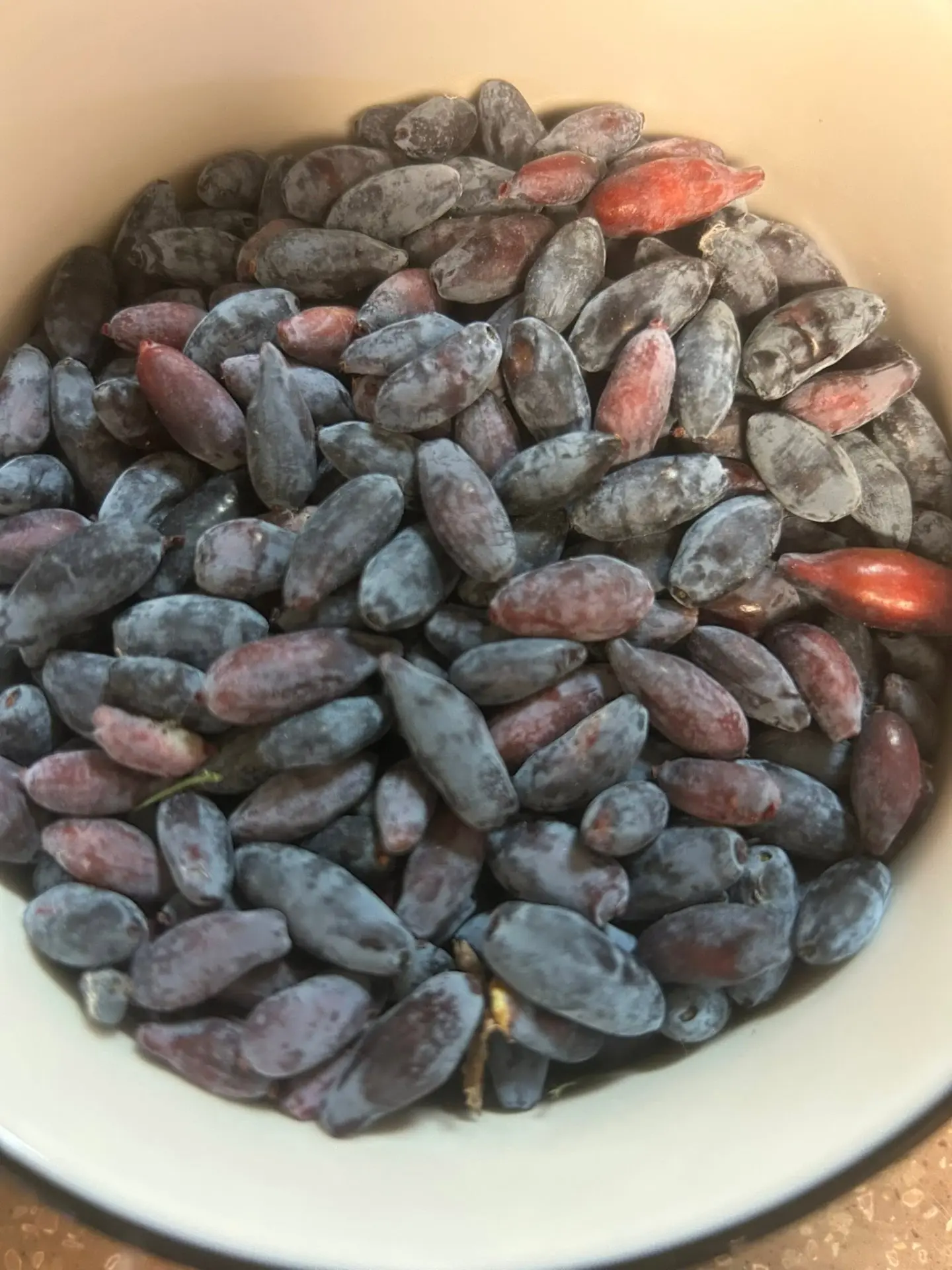
Blue-purple berries with an elongated, oblong shape — similar to a blueberry or saskatoon, but distinctly shaped. Native to northern boreal forests, they're increasingly popular as a backyard fruit across western Canada.
In Canada they're often called "honey berries," though they don't actually taste like honey — the names are used interchangeably for the same berry.
Fun fact: the name "Haskap" comes from the Japanese "hasukappu," meaning "little present on the end of a branch." Russia began cultivating them in the 1950s, Japan started commercial breeding in the 1970s, and the University of Saskatchewan launched a breeding program in the early 2000s that helped introduce them to the prairies.
How to grow it
- Incredibly hardy — thriving in temperatures as low as Zone 2.
- In Edmonton (Zone 4a) they don't just survive, they flourish, making them ideal for cold-climate gardens.
- Cindy's own bushes were originally planted in a dry, neglected spot with little water and still thrived.
- Plant more than one variety nearby for good pollination and heavier fruit set.
How to use & eat it
- Eat them fresh off the bush — they ripen earlier than most backyard berries.
- Freeze whole on a tray for smoothies, syrups, and winter baking.
- Cook down into jam, sauce, or fruit leather.
Makes friends with
Companion planting is just good neighbouring — these do better beside Haskap (Honeyberry).
Other neighbours
- Calendula (Pot Marigold)Hardy, self-seeding, vibrant flowers with edible, lightly peppery petals — great in salads and as a soothing tea.
- RhubarbThe old neighbour in the back corner who was here before you and will outlast you.
- Black CurrantSmall, dark berries on a compact, easy-care shrub — one of the most overlooked superfoods on the block.
- High Bush Cranberry (Pembina Berry)Not a true cranberry — a tall native shrub whose red clusters hang on right through winter.