Meet the neighbours · fruit
Black Currant
Small, dark berries on a compact, easy-care shrub — one of the most overlooked superfoods on the block.
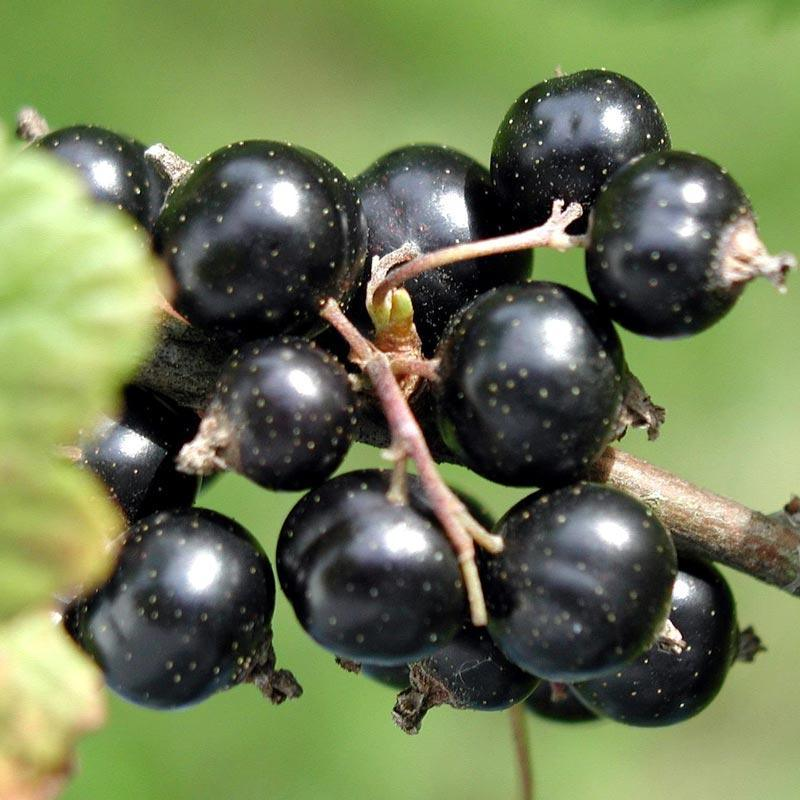
Small, dark berries — deep purple to nearly black when ripe — that grow on compact, easy-care shrubs. Give them a sunny spot and they largely take care of themselves; just net the bushes as fruit ripens to keep the birds from beating you to it.
Black currants are hardy in northern climates and quietly common in backyard gardens, even though most North Americans have never tasted one.
Fun fact: black currants were once banned across the U.S. for nearly a century (1911–1966, with some states holding on even later) because they could spread a fungus harmful to white pine trees. Rust-resistant varieties later made it safe to grow them again — and Canada never enforced a full ban to begin with.
Nutrition: up to 4× the vitamin C of oranges and roughly twice the anthocyanins of blueberries.
How to grow it
- Give the shrub a sunny spot with room to breathe — it stays compact and needs little fussing.
- Hardy in northern climates; it shrugs off cold winters.
- Net the bushes as the fruit colours up, or the birds will beat you to it.
- Prune out the oldest canes each winter to keep new wood coming.
How to use & eat it
- Naturally pectin-rich, so jam sets without store-bought pectin.
- Dry the berries (and the leaves) for tea through the winter.
- Crush fresh over chia pudding, or cook down into syrup for vinaigrettes and glazes.
Makes friends with
Companion planting is just good neighbouring — these do better beside Black Currant.
Cook with it
- Blackcurrant TeaA warming infusion made from dried black currants — sweeten to taste.
- Blackcurrant Chia PuddingA simple make-ahead pudding topped with fresh blackcurrant crush.
- Blackcurrant Vinaigrette or GlazeA tangy dressing or glaze — excellent drizzled over grilled salmon or roasted vegetables.
- Blackcurrant JamCindy calls this the best jam in the house — naturally tart, with no store-bought pectin needed since black currants are naturally pectin-rich.
Other neighbours
- ChivesHardy, self-seeding, one of the first plants up in spring.
- RhubarbThe old neighbour in the back corner who was here before you and will outlast you.
- Haskap (Honeyberry)The tough northern neighbour — blue-purple berries on a shrub that laughs at Zone 2 winters.
- High Bush Cranberry (Pembina Berry)Not a true cranberry — a tall native shrub whose red clusters hang on right through winter.